
- The 23 factors that decide whether ChatGPT, Perplexity, Gemini and Claude cite your WordPress site, ranked by real impact across 55 experiments.
- URL accessibility scored 9.5 out of 10.
- Search rank scored 9.4.
- Fan-out rank scored 9.3.
- Schema scored 5.6.
- Llms.txt scored 2.0.
- Most WordPress AEO advice puts schema and llms.txt at the front of the checklist.
- The data puts them near the back.
- This is the 2026 checklist that follows the data.
23 ranking factors decide whether ChatGPT, Perplexity, Gemini and Claude cite your WordPress site. A meta-analysis of 55 experiments, patents and case studies ranked them by real-world impact. URL accessibility scored 9.5. Search rank scored 9.4. Fan-out rank scored 9.3. Schema scored 5.6. Llms.txt scored 2.0.
Most WordPress AEO advice puts schema and llms.txt at the front of the checklist. The data puts them near the back. This post follows the data.
The full 23-factor chart sits below, grouped into five tiers by impact. Each factor has a WordPress action list, a quick way to spot-check your own site, and the AEO God Mode feature that covers it if you’re using the free plugin. Site owners who want a real audit of their site’s highest-impact AEO signals (URL accessibility, schema, structure, freshness, E-E-A-T, internal linking, plus a live AI citation check) can run the free AI Search Audit instead of working through this by hand.

How the tiers work
Five tiers, by impact score.
Tier 1 is must have (9.0 and above). Six factors. Skip any of these and the rest barely matters.
Tier 2 is should have (8.0 to 8.9). Seven factors. Quality signals that push you from indexed to cited.
Tier 3 is nice to have (6.3 to 7.6). Five factors. Real but smaller wins.
Tier 4 is low return (5.0 to 5.8). Four factors. Schema lives here. Worth doing once, not worth fussing over.
Tier 5 is skip (under 5). One factor. Llms.txt. Yes, AEO God Mode generates one. No, it’s not why anyone cites you.
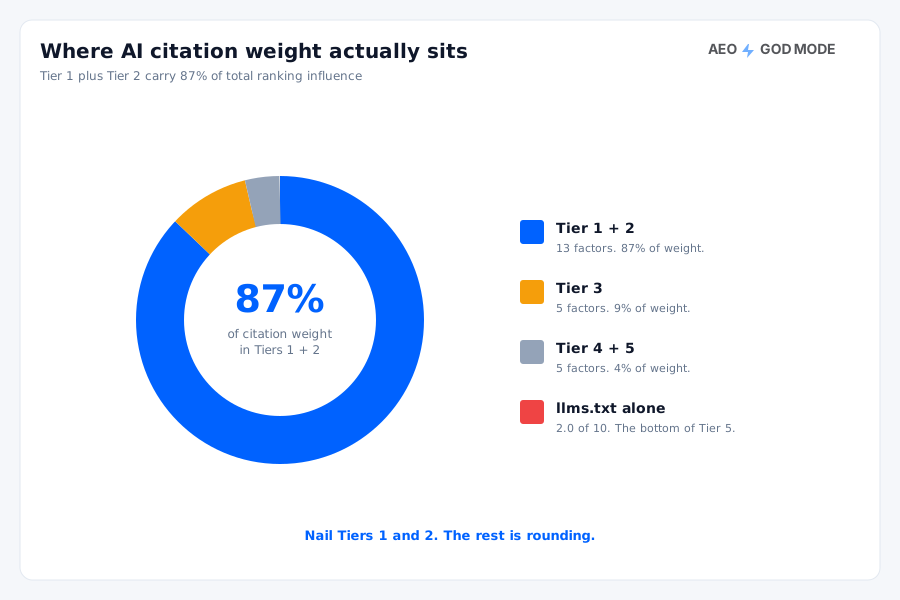
The split of where citation weight actually lives:
| Tier | Factors | Share of total citation weight |
|---|---|---|
| 1 + 2 | 13 | 87% |
| 3 | 5 | 9% |
| 4 + 5 | 5 | 4% |
Nail Tiers 1 and 2 and you’ve covered 87% of what gets sites cited by AI. That’s the bottom line.
Quick sanity-check before we go further. This list is for SaaS sites, agency sites, ecommerce, blogs, local businesses and publishers running WordPress. The tier rankings shift slightly by vertical but every factor here matters everywhere. The chart numbers are averaged across all 55 studies.
Tier 1: the six things that decide everything
These six factors are upstream of the rest. Get them wrong and nothing else saves you. Get them right and ChatGPT, Perplexity, Gemini and Claude have a real path to your content.
1. URL Accessibility: 9.5
Can the bot actually reach the page? That’s the whole question.
A bot tries to fetch your URL. If it gets a 200 OK response, plain HTML, no JavaScript walls, no soft 404s, no “Just a moment…” Cloudflare interstitial, your content is in play. If it gets blocked, slow-loaded, redirected to a login wall, or served as a Single Page App skeleton with the content injected by client-side JS, the bot leaves with nothing. AI engines cite what their crawler reads. What your reader sees in a browser doesn’t matter.
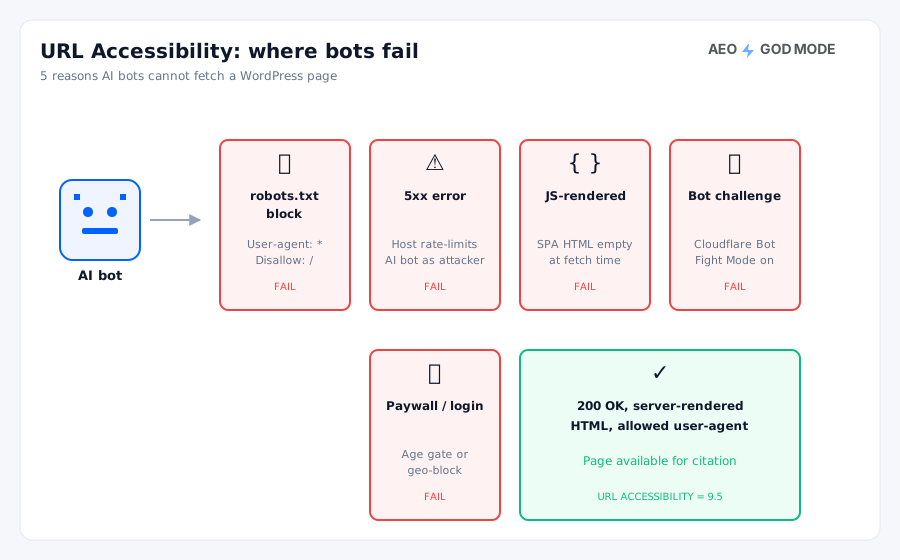
The five common reasons WordPress sites lose this one:
- Robots.txt disallows the AI crawler. GPTBot, ClaudeBot, PerplexityBot, OAI-SearchBot, Claude-SearchBot, Perplexity-User and Google-Extended each need their own rule. A blanket
User-agent: * Disallow: /blocks all of them. - Server returns 5xx errors when the AI crawler hits, often because the rate limit on the host treats the bot as an attacker.
- Page is rendered by JavaScript (React, Vue, Next.js with client-side hydration). The HTML the bot receives is empty. Server-side rendering or static export fixes this.
- Cloudflare Bot Fight Mode or Super Bot Fight Mode is on. Most AI bots get challenged and never complete the fetch.
- The page is behind a paywall, login, age gate or geo-block.
WordPress action list:
- Open AEO God Mode → AI Crawlers. Set every engine you want to be cited by to Allow. Save. The plugin writes the rules into your live robots.txt straight away.
- Open
/robots.txtin your browser and confirm the Allow lines are there. If you have a security plugin like Wordfence or iThemes, it sometimes rewrites robots.txt. Disable that override. - In Cloudflare → Security → Bots, switch off Bot Fight Mode if you have it on, or add a Page Rule that whitelists known AI user agents.
- If your theme or builder renders content client-side (Bricks dynamic content, some Elementor widgets, custom React blocks), switch the affected pages to server-rendered output. AEO God Mode flags pages with low text-to-HTML ratio in Content Gaps so you can find them.
- Test with curl:
curl -A "ClaudeBot" -I https://yoursite.com/your-post/. You want 200, not 403 or 503.
AEO God Mode covers: AI Crawler Allowlist (free), AI Crawler Log (free, shows which bots actually reached you in the last 30 days), Server-Side Rendering checks in Content Gaps (free).
The free AI Search Audit runs all five of these checks for you and flags every page that fails any of them.
2. Search Rank: 9.4
ChatGPT, Perplexity, Gemini and Claude don’t have their own web indices. They send a query to Bing, Google or a partner search API, then read the top 10 to 20 results. Your AI citation rate is mostly a function of your search rank for the queries behind the prompt.
This is the awkward truth that most AEO content avoids. AEO is downstream of SEO. If you don’t rank for the customer query, no amount of schema, llms.txt or BLUF formatting drags you into the AI answer.
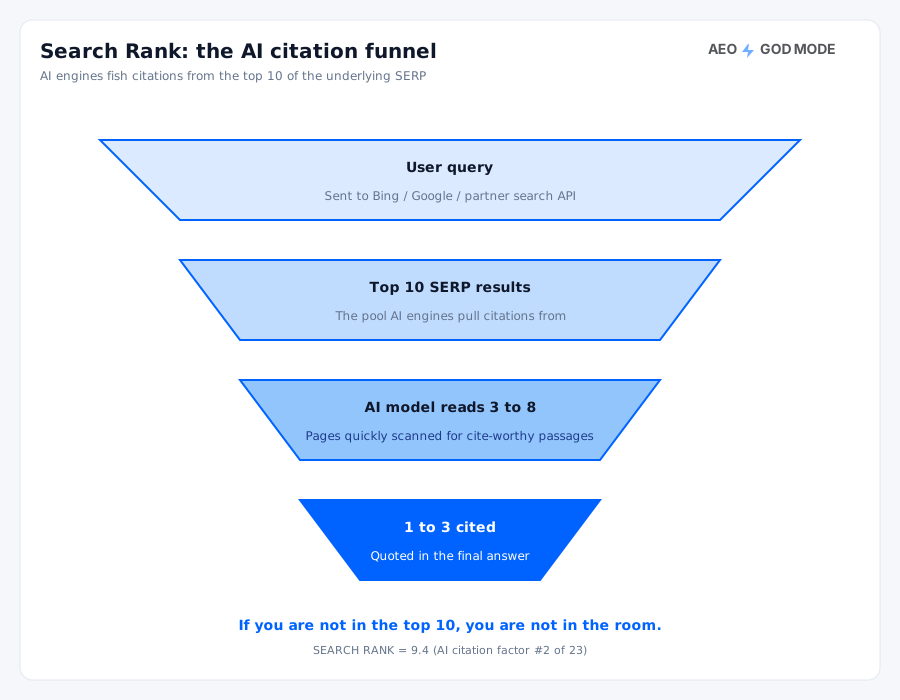
The good news is that the rank threshold for AI citation is lower than for traditional SERP clicks. A page ranking #7 for a query rarely gets clicked but often gets read by the AI and quoted. The bad news is that you still need to be in the top 10 for the queries that matter.
WordPress action list:
- Connect Google Search Console in AEO God Mode → GSC (Pro). You need to see which queries you already rank top 20 for. Those are your AI citation candidates.
- For every page ranking 11 to 20 for an AEO-relevant query, run the Internal Link Builder to push it up. Internal links are the cheapest ranking lever on a WordPress site.
- Check for keyword cannibalisation. Two pages targeting the same query split rank between them and neither makes the top 10. AEO God Mode’s GSC dashboard flags this.
- Refresh page content older than 12 months. Search rank decays without updates. Pages last updated more than two years ago are unlikely to be cited by any AI engine.
AEO God Mode covers: Google Search Console (Pro), Internal Link Builder (Pro), Query Gap Detector (Pro).
If you have no Pro features and want to know where you rank, AEO God Mode’s free Site Health dashboard surfaces the queries pulling the most impressions through Search Console.
3. Fan-out Rank: 9.3
Here is the part most WordPress AEO advice misses entirely.
When you ask ChatGPT or Perplexity a question, the model doesn’t send your literal question to search. It breaks your question into 4 to 8 smaller sub-questions (the “fan-out”), runs each as a separate search, then synthesises the results. Ranking for the original query helps. Ranking for the fan-out sub-queries is what actually gets you cited.

Example. A reader asks Perplexity, “What’s the best WordPress plugin for AEO in 2026?” The model rewrites this into:
- best WordPress AEO plugin 2026
- AEO plugin WordPress comparison
- WordPress citation tracker plugin
- llms.txt generator WordPress
- WordPress plugin ChatGPT optimisation
- AI search SEO WordPress
Six separate searches. A page that ranks #4 for the original prompt but #15 for every sub-query will lose to a page that ranks #20 for the original prompt but #3 for three of the sub-queries.
WordPress action list:
- Open AEO God Mode → GSC → Topic Clusters. The plugin shows which sub-queries each of your pages currently ranks for and flags the gaps where your page should rank but doesn’t.
- For every important page, list 5 to 10 plausible fan-out queries. Write an H2 or H3 on the page that answers each one directly. Use the exact phrasing of the sub-query as the heading.
- Use the Query Gap Detector (Pro) to surface queries you already rank for in GSC that the page doesn’t yet answer with a heading. One-click adds the answer.
- Build sibling pages that target the harder fan-out queries directly. A pillar page on “WordPress AEO” plus six spoke pages on “WordPress AEO for SaaS”, “WordPress AEO pricing”, “WordPress AEO vs SEO” and so on covers fan-out far better than one fat page.
AEO God Mode covers: Topic Clusters (Pro), Query Gap Detector (Pro), Internal Link Builder (Pro).
4. Preview Control: 9.2
AI engines read your page like a search engine would. They see the meta title, meta description, OpenGraph tags, schema, and the first few hundred words of body content. That bundle is the “preview” the model uses to decide whether to quote your page or skip it.
Bad preview = skip. Good preview = quote.

Things that wreck previews on WordPress:
- Default theme meta titles that read “Page Title – Site Name”. AI sees “Page Title” and discards “Site Name” as boilerplate.
- Meta description copied from the first paragraph that itself opens with “Welcome to our blog!” or similar fluff.
- OpenGraph image set to a generic logo so every page looks identical to crawlers comparing snippets across your site.
- Missing or empty schema. The AI doesn’t know if the page is an article, a product, a FAQ, a how-to.
WordPress action list:
- Use AEO God Mode’s AI Metadata Generator (free, 10 credits per month) to rewrite meta titles and descriptions for your top 20 pages. The free credits cover most small sites. Pro removes the cap.
- Set a unique OpenGraph image for every page (most SEO plugins let you set a default per post). For listicle and how-to posts, the OG image is one of the strongest signals for AI summary cards.
- Enable Schema Engine in AEO God Mode. The plugin auto-detects article, product, FAQ, how-to, organisation, person, breadcrumb and emits the right schema for each post type.
- Avoid running Schema Engine alongside Yoast or Rank Math’s schema unless you’ve resolved conflicts in the Conflicts panel. Two plugins emitting Article schema = duplicate signals = downgraded preview.
AEO God Mode covers: AI Metadata Generator (free), Schema Engine (free), Schema Conflict Detector (free).
5. Query-Answer Match: 9.2
The page needs to contain the exact question and a direct answer in close proximity. AI engines extract passages, not pages. If your page is “about” the query but never restates it word-for-word followed by a clean answer, the extractor walks away empty.
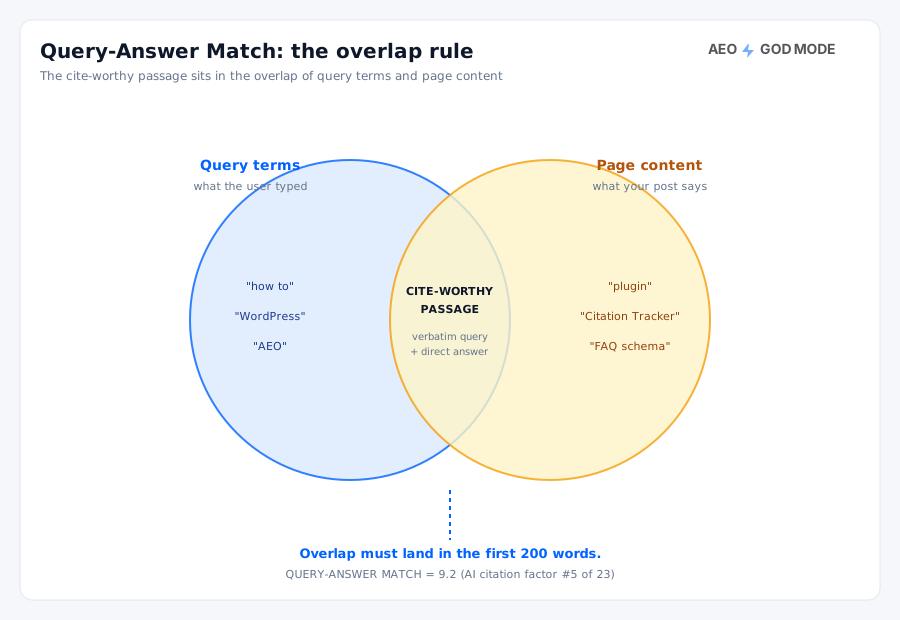
This is also the highest-impact area where the average WordPress post fails. Most posts open with context, history, a quote from a CEO, or a list of what the post will cover. The actual answer to the question the reader searched for sits in paragraph 7.
WordPress action list:
- For every post, identify the primary query the page should rank for. Put it verbatim in the first H2.
- Answer that question in the next two sentences. Direct. Plain. No throat-clearing.
- Add an FAQ block at the bottom of the post with 4 to 8 question-answer pairs covering the obvious sub-queries. Each Q goes in the FAQPage schema.
- For SaaS or service pages, use the Query Gap Detector (Pro) to pull every query Search Console says you rank for, then check whether each one has a matching H2 or paragraph answer on the page. One-click adds the missing answer.
AEO God Mode covers: Answer Density (free, scores every H2 on a post for whether the next sentence directly answers it), Query Gap Detector (Pro).
Answer Density on the free tier alone catches most of these. Run it on your top 10 posts and you’ll find at least half have buried answers.
6. Intent-Format Match: 9.0
A definition query gets a one-sentence definition. A how-to query gets a numbered list. A comparison query gets a table. A list query gets bullets. When the page format matches the query intent, AI engines extract clean. When the format doesn’t match, the page is harder to quote and gets skipped.
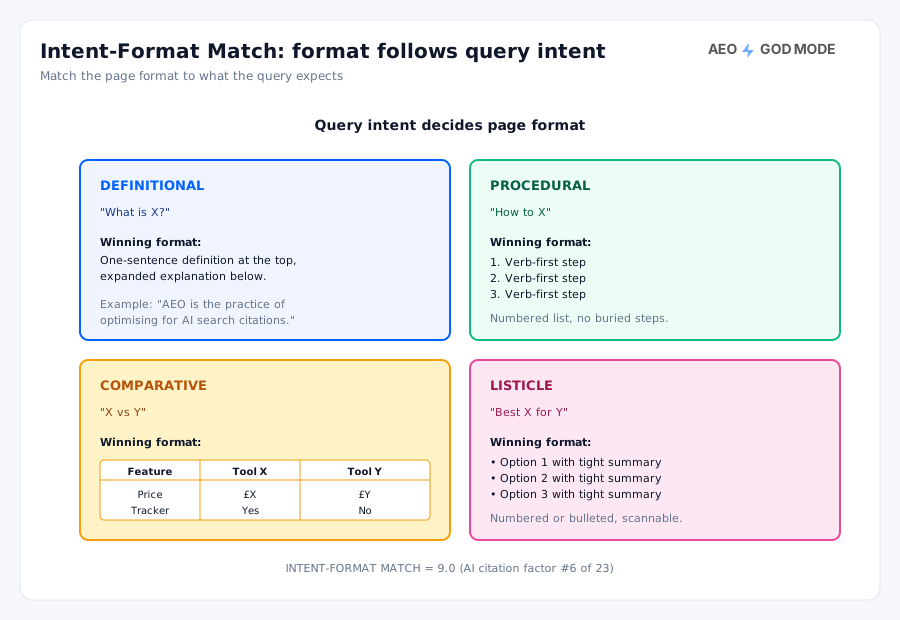
The four common intent-format pairings:
- Definitional: “What is X?” → one-sentence definition at the top, then expanded explanation.
- Procedural: “How to do X” → numbered list of steps, each with a verb-first action.
- Comparative: “X vs Y” → comparison table early in the post, then per-item walkthroughs.
- Listicle: “best X for Y” → numbered or bulleted list of options, each with a tight summary.
A how-to post that buries its steps inside prose paragraphs loses to a competitor with a numbered list every time. A comparison post that uses prose instead of a table loses too.
WordPress action list:
- For every post, write out the query the page targets, then state its intent (one of the four above).
- Audit the post format. Does it match? If your “How to install WordPress” post uses prose, refactor it into a numbered list.
- Put the format-matching section near the top. The table on a comparison post should appear in the first screen, not after 2,000 words of preamble.
- Use AEO God Mode → Content Gaps → Improvements to surface posts where the format doesn’t match the query intent. The scanner flags missing numbered lists on how-to posts, missing tables on comparison posts, and so on.
AEO God Mode covers: Content Gap Scanner (free), Schema Engine (free, emits HowTo schema on detected how-to pages, ItemList schema on detected listicles).
That’s Tier 1. Six factors, 87% of citation weight contributed by the top two tiers, and most of that compressed into these six. If you stop reading here and only act on the above, you’ll move the needle more than anything else in this post.
If you’d rather have these checked for your site automatically, run the free AI Search Audit. It scans URL accessibility, schema breadth, structure, freshness, E-E-A-T signals, internal linking, and runs a live AI citation check. No signup, no email gate, results in under a minute.
Tier 2: the seven quality signals
Tier 2 factors push pages from indexed to cited. None of them are individually decisive. Together they are most of the gap between competitors with the same Tier 1 setup.
7. Topic Cluster Ranking: 8.9
A page ranking well on its own is good. A page that sits in a tight cluster of interlinked pages on the same topic is better. AI engines treat topic clusters as evidence of expertise. A site with 12 pages on WordPress AEO, internally linked, outranks a site with one fat 8,000-word post on the same topic.
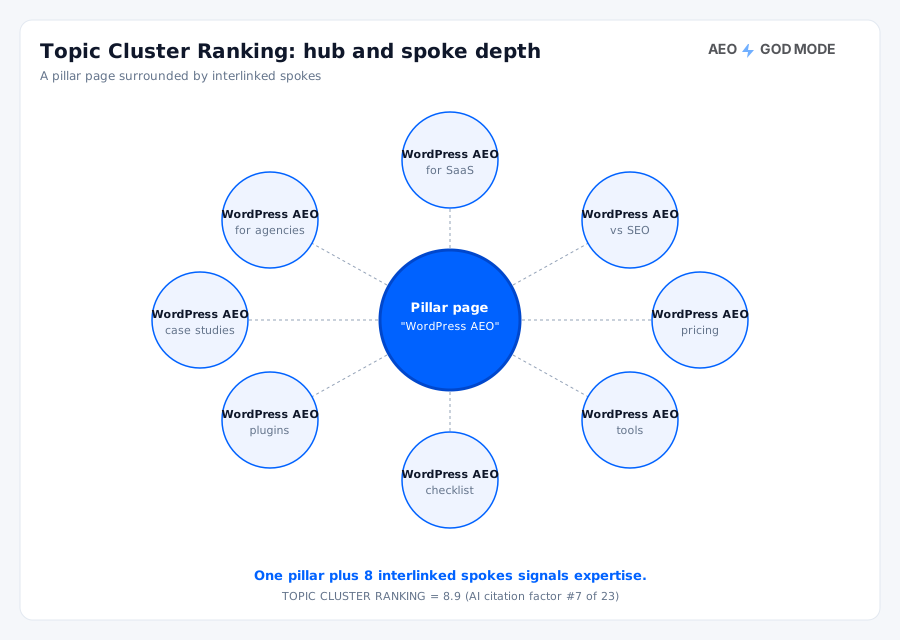
Action: Pick three topics you want AI to associate with your brand. Build one pillar page plus 5 to 8 spoke pages per topic, all interlinked. AEO God Mode’s Topic Clusters panel shows you which clusters Search Console thinks you have and where the gaps are.
8. Answer Near the Top: 8.8
The cite-worthy passage needs to live in the first 200 words. AI extractors give weight to position. A perfect answer 1,500 words in is worth less than a decent answer in the second paragraph.
Action: Open every post and check the second paragraph. Does it contain a direct answer to the title query? If not, rewrite. AEO God Mode’s Answer Density module scores this automatically.
9. AI-ready Structure: 8.6
H2 and H3 headings that read like questions. Short paragraphs (3 to 4 sentences). Bullet lists and numbered lists. Subheadings every 200 to 300 words. Bots extract passages aligned to heading boundaries, so each heading needs a coherent self-contained answer below it.
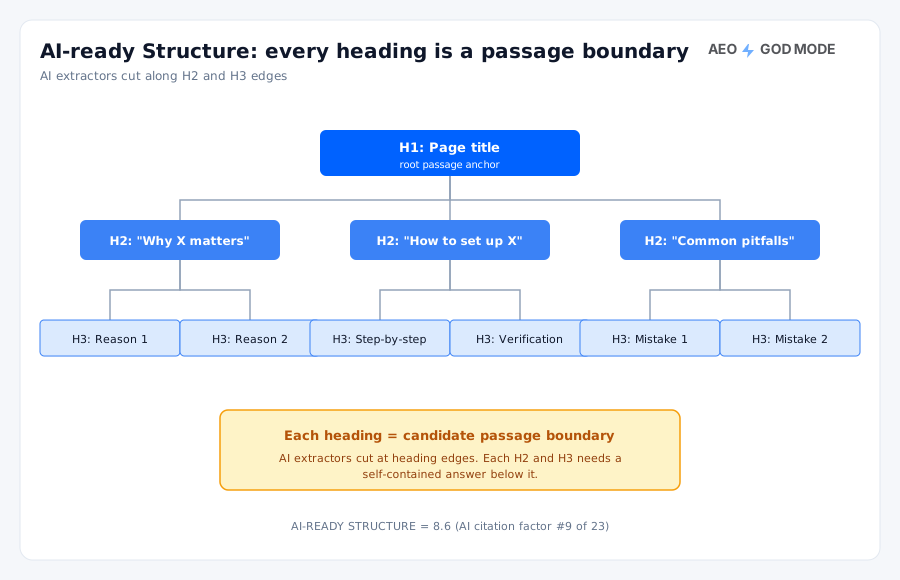
Action: Audit your top 20 posts for heading depth. Add H2s every 300 words. Convert prose-heavy sections into numbered lists. Use AEO God Mode’s Content Gap Scanner to find posts with no H2s in the first 500 words.
10. Factually Precise: 8.3
Hard numbers, named entities, dates, version numbers, prices. Vague content gets skipped. AI engines prefer to quote sentences with concrete facts because those are the sentences readers expect citations for.
Action: Sweep posts for filler adjectives (“huge”, “powerful”, “amazing”). Replace each with a number, a comparison, or a named example. A sentence like “AEO God Mode has many useful features” becomes “AEO God Mode tracks citations across four AI engines and runs on 18 AI crawler patterns”.
11. Explicit Phrasing: 8.1
Restate the question inside the answer. “Why does ChatGPT skip my site? ChatGPT skips your site because…” reads slightly stilted to a human but extracts cleanly for an AI. Don’t overdo it. Once per heading is enough.
Action: For every Q-style H2 on your site, make sure the first sentence under it restates the question as a statement before answering.
12. Cites Sources: 8.0
Outbound links to authoritative sources increase your own citability. AI engines treat well-sourced pages as more trustworthy and more quotable. Two to four outbound links per article, to non-competing authoritative domains, is the sweet spot.
Action: Audit your top posts. Add outbound links to primary sources where you reference data, studies or external tools. Avoid linking only to competitors or only to your own pages.
13. Self-Contained Passages: 8.0
Each paragraph needs to read as a standalone unit. Avoid phrases like “as we discussed above” or “see the section below”. AI extractors lift paragraphs without their context. If your paragraph 6 only makes sense after reading paragraphs 1 through 5, it cannot be cited.
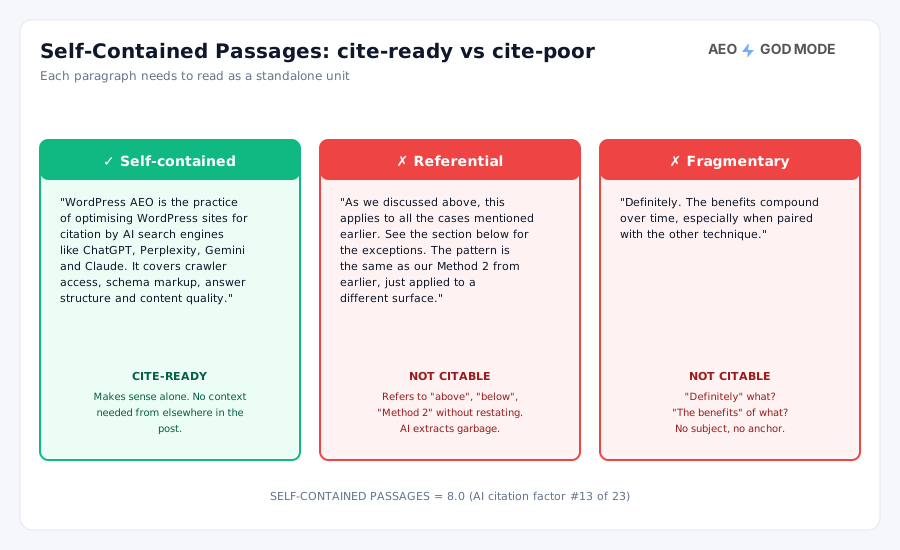
Action: Read every paragraph in a top post in isolation. If it doesn’t make sense alone, rewrite it to include the missing context. Banish phrases like “as mentioned earlier”, “in the section above”, “see below” from anything you want cited.
That covers Tier 2. Two minutes of work per page on items 8 through 13 will outperform every llms.txt generator on the WordPress.org repository.
Tier 3: the five medium-impact factors
14. Content Visibility: 7.6
Same as URL Accessibility but at the content level. Is the answer behind a paywall, in a hidden tab, inside an accordion that only loads on click, or only available to logged-in users? AI engines don’t click. They read what’s there on page load.
Action: Open every key page with JavaScript disabled in dev tools. If the content disappears, fix it. Accordions and tabs should ship their content in the initial HTML, hidden by CSS, not lazy-loaded by JS.
15. Freshness: 7.0
Pages updated in the last 12 months get more AI citations than pages last touched two years ago. The signal AI engines look at is the date in the article schema, the last-modified meta, and the visible “updated” stamp on the page.
Action: Refresh top-performing posts on a rolling schedule. Update the modified date, add new sections, replace dated screenshots. AEO God Mode’s Schema Engine sets dateModified automatically.
16. Brand / Entity Trust: 6.8
Mentions of your brand on other sites, especially on Wikipedia, Reddit, YouTube and authoritative industry blogs, raise your AI citation rate. The model has seen your brand elsewhere in its training data and treats your site as a known entity.
Action: Pursue brand mentions and citations on third-party content. Get listed in industry roundups. Answer questions on Reddit and Quora with your name attached. This work sits outside the WordPress plugin layer but moves the needle for AI citation.
17. Length: 6.7
Long enough to be substantive, not so long it dilutes the answer. The sweet spot for AI citation runs 1,200 to 3,500 words depending on intent. Definition posts can be 600. How-to and comparison posts benefit from 2,500 to 3,500.
Action: Check your underperforming posts. If they’re under 800 words, expand. If they’re over 5,000 with a single answer buried inside, split.
18. Language: 6.3
Match the language of your audience. Sounds obvious. The trap is mixing UK and US English on the same page, or using industry jargon when the query phrasing is plain English. AI engines weight pages that match the query register.
Action: Pick one (UK or US English) and stick to it across the site. Match your H2 phrasing to how customers actually phrase queries, not to internal product names.
Tier 4: the four diminishing-return factors
This is where most plugins sell features hardest. The data says these matter less than you’ve been told.
19. Entity Consistency: 5.8
Same brand spelling everywhere (“AEO God Mode”, not occasionally “AEO Godmode” or “AEOGodMode”). Same product names. Same author names. Helps AI engines build a clean entity graph.
Action: One pass through your site search-replacing inconsistent brand spellings. Done.
20. Structured Data: 5.6
Yes, schema. The thing every AEO plugin pitches as essential. The data has it at 5.6 out of 10. Worth doing once with Schema Engine on autopilot. Not worth obsessing over field completeness or stacking nine schema types per page.
Action: Enable AEO God Mode’s Schema Engine. Set it to autopilot. Move on. If you also run Yoast or Rank Math, use the Conflicts panel to pick one source of truth per schema type.
21. Known Source: 5.4
Has your brand been cited by AI before? Has it appeared in places the model saw during training? This is a slow-build moat. New sites score zero here. Established sites score higher even without trying.
Action: Time. There is no quick action. Keep publishing. Eventually you become a known source.
22. Domain Authority: 5.0
The Moz / Ahrefs metric. AI engines weight it less than traditional search does. A high-DA site has a small advantage in citation rate, but a low-DA site with strong Tier 1 and Tier 2 signals beats a high-DA site that ignored them.
Action: Domain authority is a side effect of doing the rest of this list well over time. Ignore it as a direct lever.
Tier 5: the one to skip
23. Llms.txt: 2.0
The proposed standard that lets a site curate the URLs and prompts it wants AI engines to use. AEO God Mode generates one. Most plugins sell their llms.txt generator as the headline feature.
The data says 2.0 out of 10.
Reality: a handful of AI agents do honour llms.txt during inference. Most don’t. The crawl-time bots ignore it entirely. The training-time bots ignore it entirely. The fan-out search bots ignore it. So while the file should exist for the agents that do honour it, the order of operations matters. Llms.txt is what you ship after Tier 1, 2, 3 and 4 are done, not before.
Action: Generate it once with AEO God Mode’s llms.txt Generator (free). Forget about it. Spend the saved time on Tier 1.
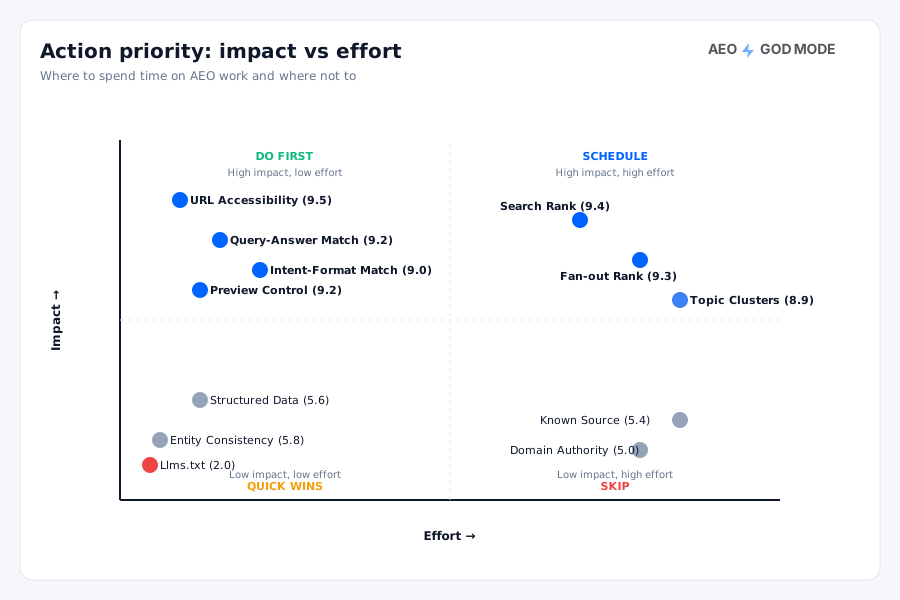
The real score: where to actually spend your time
The 23 factors, by share of total citation weight: Tier 1 plus Tier 2 deliver 87%. Tier 3 adds 9%. Tier 4 and Tier 5 combined are 4%.
The action priority is straightforward.
For a site starting from zero on WordPress AEO, the order is:
- Tier 1 in full (URL access, search rank, fan-out, preview, query-answer, intent-format). Two days of work.
- Tier 2 quick wins across all top 20 posts (BLUF answers, headings, factual precision, source citations). One week.
- Tier 3 ongoing as part of normal content work (freshness, brand mentions).
- Tier 4 once, set and forget.
- Tier 5 generated and ignored.
For a site that already has decent SEO and is wondering why AI engines don’t cite it, the answer is almost always Tier 1 #4 (Preview Control) or Tier 1 #5 (Query-Answer Match). Either the meta and schema are misaligned with the page content, or the page never restates the customer query in clean answer form near the top.
The cheap wins are where to start. URL accessibility checks take ten minutes. Restating the customer query in the first H2 takes one minute per post. Adding a FAQ block with the obvious sub-questions takes fifteen minutes.
The expensive wins are search rank and topic cluster ranking. Those compound over months. Start them, then come back. Don’t wait for them to land before doing the cheap wins.
What AEO God Mode covers
AEO God Mode actively addresses 16 of the 23 factors. 11 are covered with strong features (URL Accessibility, Search Rank, Fan-out Rank, Preview Control, Query-Answer Match, Topic Cluster Ranking, Answer Near the Top, Freshness, Length, Structured Data, and Llms.txt). 5 are covered partially (Intent-Format Match via Schema Engine flags, AI-ready Structure via Content Gap Scanner, Factually Precise via Pro AI Assist nudges, Content Visibility via thin-content checks, and Entity Consistency via Schema Engine). The remaining 7 (Explicit Phrasing, Cites Sources, Self-Contained Passages, Brand / Entity Trust, Language, Known Source, Domain Authority) depend on content quality, off-site brand mentions, or time.

The Pro tier adds the search rank and fan-out parts (Google Search Console support, Topic Clusters, Internal Link Builder, Query Gap Detector) plus the Citation Tracker that actually measures whether AI engines are now citing you.
Run the free AI Search Audit to see your score across the highest-impact AEO factors: URL accessibility, schema breadth, page structure, freshness, E-E-A-T signals, internal link graph, and a live AI citation check. No signup. Or install AEO God Mode Free from the WordPress plugin directory and work through the per-page action lists in your wp-admin.
FAQ
No. SEO gets you ranked in Google. AEO gets you cited by ChatGPT, Perplexity, Gemini and Claude. The overlap is large but the goals differ. SEO optimises for the click. AEO optimises for the quote.
Make sure AI crawlers can actually fetch your pages. URL Accessibility scores 9.5 out of 10, the top of the list. Open AEO God Mode AI Crawlers, set every engine to Allow, and confirm your robots.txt and Cloudflare settings let the bots through. Most sites fail here without knowing it.
Barely. The data scores it 2.0 out of 10, the lowest of 23 factors. A handful of AI agents honour it during inference. Most don’t. Generate one with AEO God Mode’s llms.txt Generator and then forget about it. Spend the time on Tier 1.
Some. The data scores it 5.6 out of 10, in the diminishing-return tier. Worth enabling AEO God Mode’s Schema Engine on autopilot, not worth obsessing over field completeness or stacking nine schema types per page. The plugin handles it once and you move on.
Build sibling pages that each target one of the sub-queries an AI engine will run. A pillar page on WordPress AEO plus six spoke pages targeting named sub-queries covers fan-out better than one long pillar. AEO God Mode’s Topic Clusters panel shows which sub-queries you currently rank for and where the gaps are.
No. AEO God Mode runs alongside Yoast, Rank Math, SEOPress and All in One SEO. The Schema Conflict Detector identifies overlapping schema output and lets you pick a single source of truth per type. Your titles, meta descriptions, canonicals and sitemaps stay with your existing SEO plugin.
Run AEO God Mode’s Citation Tracker (Pro). It queries ChatGPT, Perplexity, Gemini and Claude directly with your customer queries and logs whether your site appears in each answer, with the cited URL and quoted text. Free plugins guess from crawler logs. The Tracker measures it directly across all four engines.
Tier 1 fixes (URL accessibility, preview control, query-answer match) show up in AI citations within 2 to 4 weeks once bots re-crawl. Search rank changes (Tier 1 #2) take longer, 6 to 12 weeks. Topic cluster builds are 3 to 6 months for full effect. Track it with Citation Tracker rather than guessing.
{ “@context”: “https://schema.org”, “@type”: “FAQPage”, “mainEntity”: [ { “@type”: “Question”, “name”: “Is AEO the same as SEO?”, “acceptedAnswer”: { “@type”: “Answer”, “text”: “No. SEO gets you ranked in Google. AEO gets you cited by ChatGPT, Perplexity, Gemini and Claude. The overlap is large but the goals differ. SEO optimises for the click. AEO optimises for the quote.” } }, { “@type”: “Question”, “name”: “What’s the single highest-impact action for WordPress AEO?”, “acceptedAnswer”: { “@type”: “Answer”, “text”: “Make sure AI crawlers can actually fetch your pages. URL Accessibility scores 9.5 out of 10, the top of the list. Open AEO God Mode AI Crawlers, set every engine to Allow, and confirm your robots.txt and Cloudflare settings let the bots through. Most sites fail here without knowing it.” } }, { “@type”: “Question”, “name”: “Does llms.txt matter for AEO?”, “acceptedAnswer”: { “@type”: “Answer”, “text”: “Barely. The data scores it 2.0 out of 10, the lowest of 23 factors. A handful of AI agents honour it during inference. Most don’t. Generate one with AEO God Mode’s llms.txt Generator and then forget about it. Spend the time on Tier 1.” } }, { “@type”: “Question”, “name”: “Does schema markup matter for AEO?”, “acceptedAnswer”: { “@type”: “Answer”, “text”: “Some. The data scores it 5.6 out of 10, in the diminishing-return tier. Worth enabling AEO God Mode’s Schema Engine on autopilot, not worth obsessing over field completeness or stacking nine schema types per page. The plugin handles it once and you move on.” } }, { “@type”: “Question”, “name”: “How do I rank for AI fan-out queries?”, “acceptedAnswer”: { “@type”: “Answer”, “text”: “Build sibling pages that each target one of the sub-queries an AI engine will run. A pillar page on WordPress AEO plus six spoke pages targeting named sub-queries covers fan-out better than one long pillar. AEO God Mode’s Topic Clusters panel shows which sub-queries you currently rank for and where the gaps are.” } }, { “@type”: “Question”, “name”: “Will AEO God Mode conflict with Yoast or Rank Math?”, “acceptedAnswer”: { “@type”: “Answer”, “text”: “No. AEO God Mode runs alongside Yoast, Rank Math, SEOPress and All in One SEO. The Schema Conflict Detector identifies overlapping schema output and lets you pick a single source of truth per type. Your titles, meta descriptions, canonicals and sitemaps stay with your existing SEO plugin.” } }, { “@type”: “Question”, “name”: “How do I know if ChatGPT or Perplexity actually cite my site?”, “acceptedAnswer”: { “@type”: “Answer”, “text”: “Run AEO God Mode’s Citation Tracker (Pro). It queries ChatGPT, Perplexity, Gemini and Claude directly with your customer queries and logs whether your site appears in each answer, with the cited URL and quoted text. Free plugins guess from crawler logs. The Tracker measures it directly across all four engines.” } }, { “@type”: “Question”, “name”: “How long until AEO work shows results?”, “acceptedAnswer”: { “@type”: “Answer”, “text”: “Tier 1 fixes (URL accessibility, preview control, query-answer match) show up in AI citations within 2 to 4 weeks once bots re-crawl. Search rank changes (Tier 1 #2) take longer, 6 to 12 weeks. Topic cluster builds are 3 to 6 months for full effect. Track it with Citation Tracker rather than guessing.” } } ] }Run the free AI Search Audit. See your score across the highest-impact AEO factors: URL accessibility, schema breadth, structure, freshness, E-E-A-T, internal linking, and a live AI citation check. No signup, no email gate. Start the audit.
Or install AEO God Mode Free from the WordPress plugin directory and work through the per-page action lists in your wp-admin.